


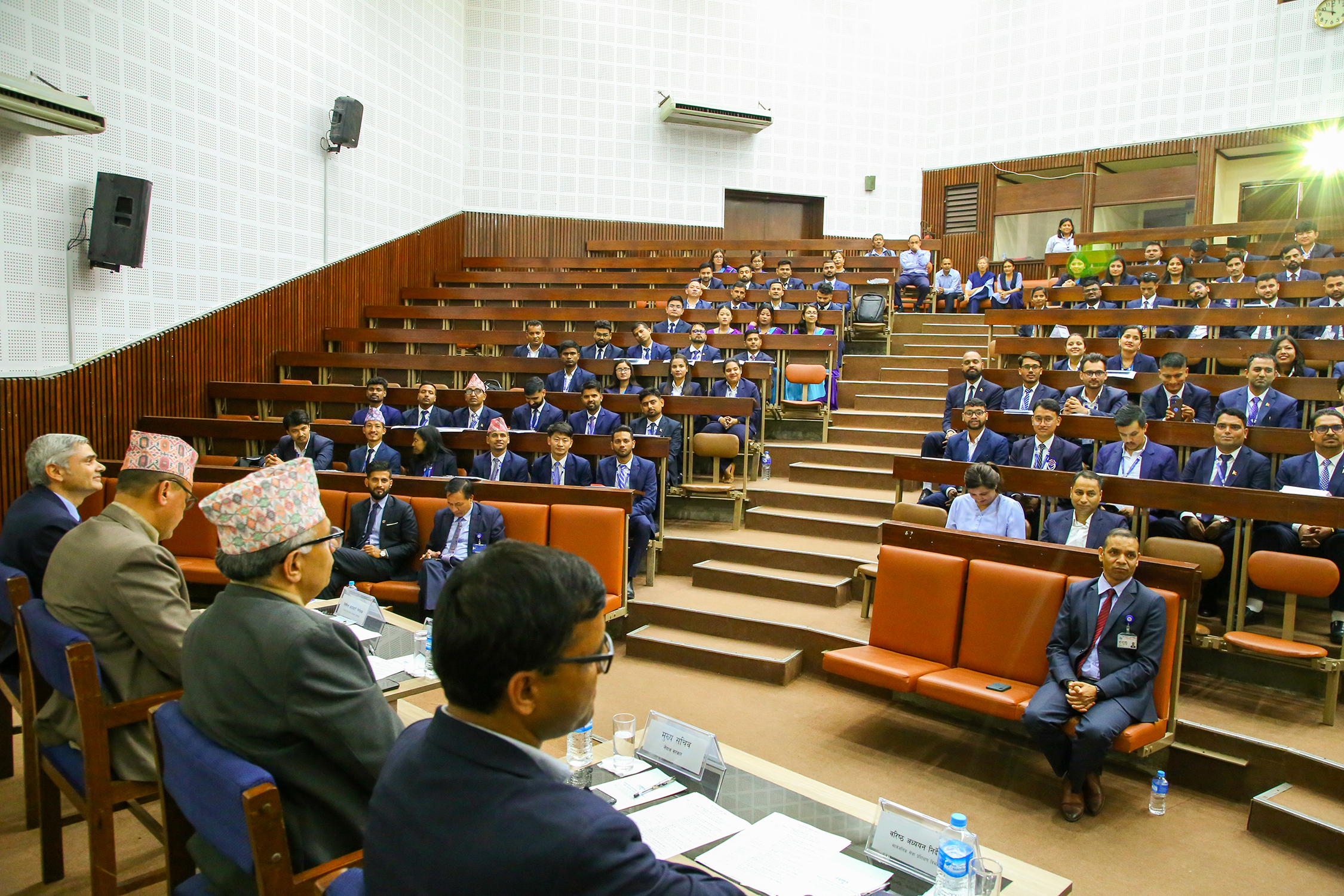
Public administration has been considered the leading institution for the overall management of public affairs. Nepal’s public service conduits the public administration, which requires a balance of cutting-edge ability and accountability. The public service is enriched through the entrants of the officers who have better exposure to technology, learning aptitude, imagination and critical thinking. We need to amplify the competency of new entrants by consolidating their knowledge, skills and attitude in a progressive way. The Constitution of Nepal underscores the fundamental qualities of the public administration as ‘fair, competent, impartial, transparent, free from corruption, accountable and participatory’. With these qualities, the public administration shall drive the nation at par with the global standard.
With immense potential and public aspirations for prosperity, Nepal has to take multiple initiatives for the socio-economic transformation of the country. This transformation will then lead to the vision of ‘sustainable peace, good governance, development and prosperity’. Hence, the direction and magnitude of transformation largely depend on the competency of public administration.
The Basic Administration Training (BAT), has been designed to provide learning and socialization exposure to the new entrants Gazetted Class III officers. The induction course is a package of components that together enhances the ‘circle of influence’ of the participants. It provides opportunities to augment knowledge, skills and behaviour through a number of in-class exercises, field visit, excursion, co-curricular activities and peer learning.
The course is based on the principles of developing a professional foundation for new entrants, who will have core skills for managing public affairs and delivery of public services in an efficient and innovative way. Creating a balance between theory and practice, the course provides participants with an opportunity for contestation, creation and consolidation.
Competency Framework
The course is designed to enhance the three core competencies of the participants- a) values and ethos, b) proficiency and c) service orientation. These competencies together augment the ability of class III officers to become serving officers who will be committed to delivering quality services. These competencies are a set of knowledge, skills and behaviours that are essential constituents for elevating performance. As the frontline officers, they have to prepare themselves to take responsibility for providing citizen-centric services. With the advancement in technology and innovation, public service is at a crossroads. To deliver quality service, the public administration has to be forward-looking and performing. The induction course has been designed to promote the competency of trainee officers who will lead the frontline service delivery.
Values and Ethos
This competency is considered the foundation for building a value-based public administration. The values and ethos of public administration include integrity and ethics, creative and positive thinking, teamwork, accountability and rule of law, among others.
Proficiency
This competency enables one to acquire the required knowledge and skills for performing the assigned task efficiently and effectively.
Proficiency includes knowledge and skills such as efficient management of resources, building professional relationships, and use of technology, among others, for better performance.
Service Orientation
This competency develops the perspectives and attitudes of officer trainees to consider that serving the citizens is the soul of public service. As the custodians of public service, public officials need to have empathy, serving and problem-solving attitudes and work for public interest.
Citizen Engagement
Fostering ethical governance through integrity, innovative solutions, collaboration, responsibility, and adherence to regulations.
Course Objectives
This course aims to transform trainee officers into ‘serving officers’, who have aforementioned competencies and demonstrate commitment to deliver ‘quality service’.
The induction course aims to develop the functional and behavioural competencies of new entrant officers to prepare them to take responsibilities with professional competencies and motivate them to serve the nation and its citizens.
Training Methods
The course shall be a fine balance between theory and practice, delivered through social learning approaches. It includes participatory methods, interactive lectures, simulations, group and individual exercises, and participant-led activities, among others. Throughout the course, participants will be recognized as co-facilitators and will have opportunities for engagement and contribution.
Course Structure
The course is a composite of thematic modules delivered through classroom, excursions, field visits and co-curricular activities (CCA). These components collectively contribute to enhancing the competencies of participants for better performance. The induction course has two phases. The first phase is a foundation course for the officer trainees of all service groups. It is generally of four months. The officer trainees from Revenue, Account, Audit, Parliament and Foreign Affairs will be graduated after completing foundation course and join the respective service specific training centers for the specific course. The officer trainees from General Administration group will continue the training at NASC.
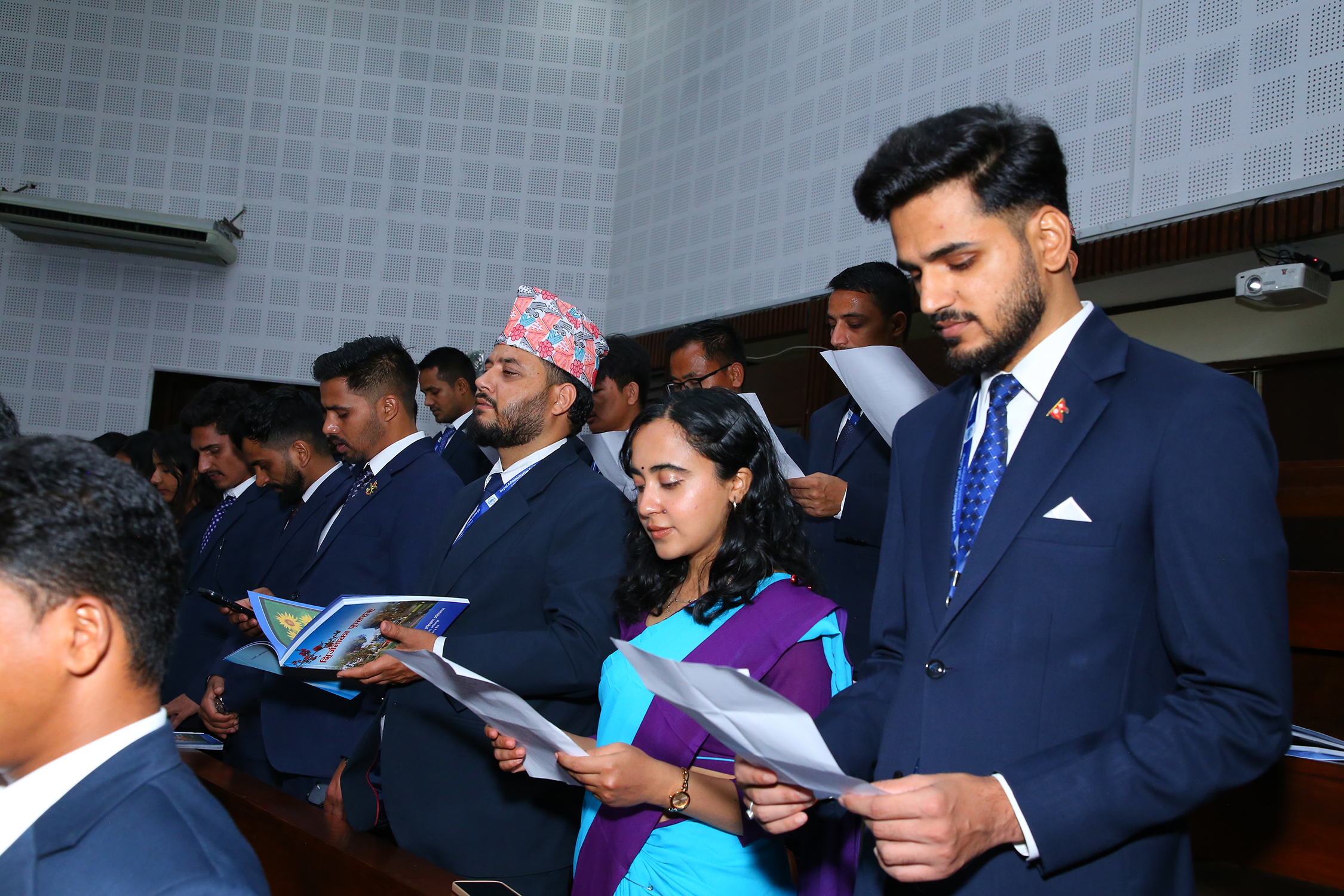
Modules & Learnings
The classroom learning sessions provide analytical understanding as well as practical skills in various thematic areas of management, public administration, governance and service delivery. Contents in the classroom sessions have been structured at six different modules in the foundation course for the officer trainees of all services.
Know Your Country (KYC)
KYC is a week-long immersive and interactive excursion to different parts of the country. During this excursion trainee officers will have close observation of government functions and interact with people. It will develop perspectives of officer trainees on geographic, socio-economic, and cultural aspects and livelihood of people. They will also learn about the state of service delivery and the scope of reform from the people’s perspective. This excursion is a part of socialization and lab for developing skills like leadership, public communication, research and analysis, empathy, thinking innovatively, which are then required for better service delivery. Participants have to prepare a learning reflection report and share in the plenary, in a given structure. NASC will arrange for transportation facilities and participants will be provided subsistence allowance as per the NASC rules.
Internship
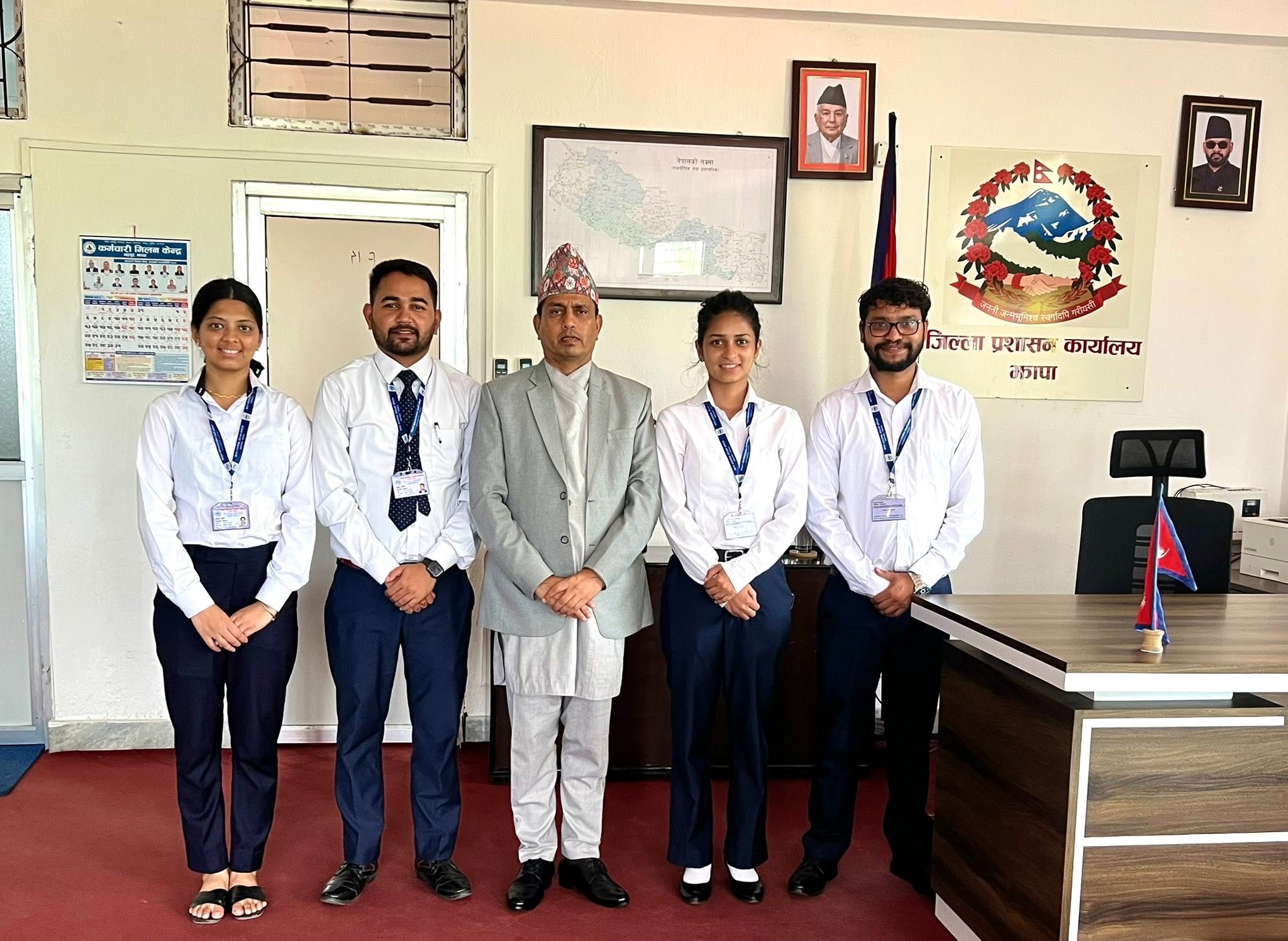
The trainee officers from the General Administration service group will have to complete two months internship. The internship is one of the critical components of the induction course. The aim of the internship is to provide extend learning opportunities for officer trainees, before assuming the full responsibility. This will then better prepare them to take responsibility on their deputation. During internship, officer trainees will be placed in different district level and municipal offices. Officer trainees will learn about ways of functioning under the supervision of the assigned office chief and co-workers.
This exposure will be instrumental to learn organizational culture, work environment, the status and issues of service delivery. Placement of officers trainees will be based on defined criteria with the intention of providing learning opportunity. The officer trainees will receive monthly subsistence stipend and transportation cost as defined by NASC. The two-month internship for trainee officers from the General Administration service group is a crucial part of their induction training, designed to provide hands-on experience before they take on full responsibilities. During this period, officers will be placed in district and municipal offices, where they’ll learn operational processes under the guidance of senior officials, gaining insight into organizational culture and service delivery challenges. The internship also includes a monthly stipend and transportation allowance as per NASC guidelines, ensuring that trainees can fully focus on their learning without financial strain. This immersive experience not only prepares them for future deputation but also equips them with practical skills and a deeper understanding of public administration. By combining structured training with real-world exposure, the program ensures officers are well-prepared to handle their upcoming roles effectively.