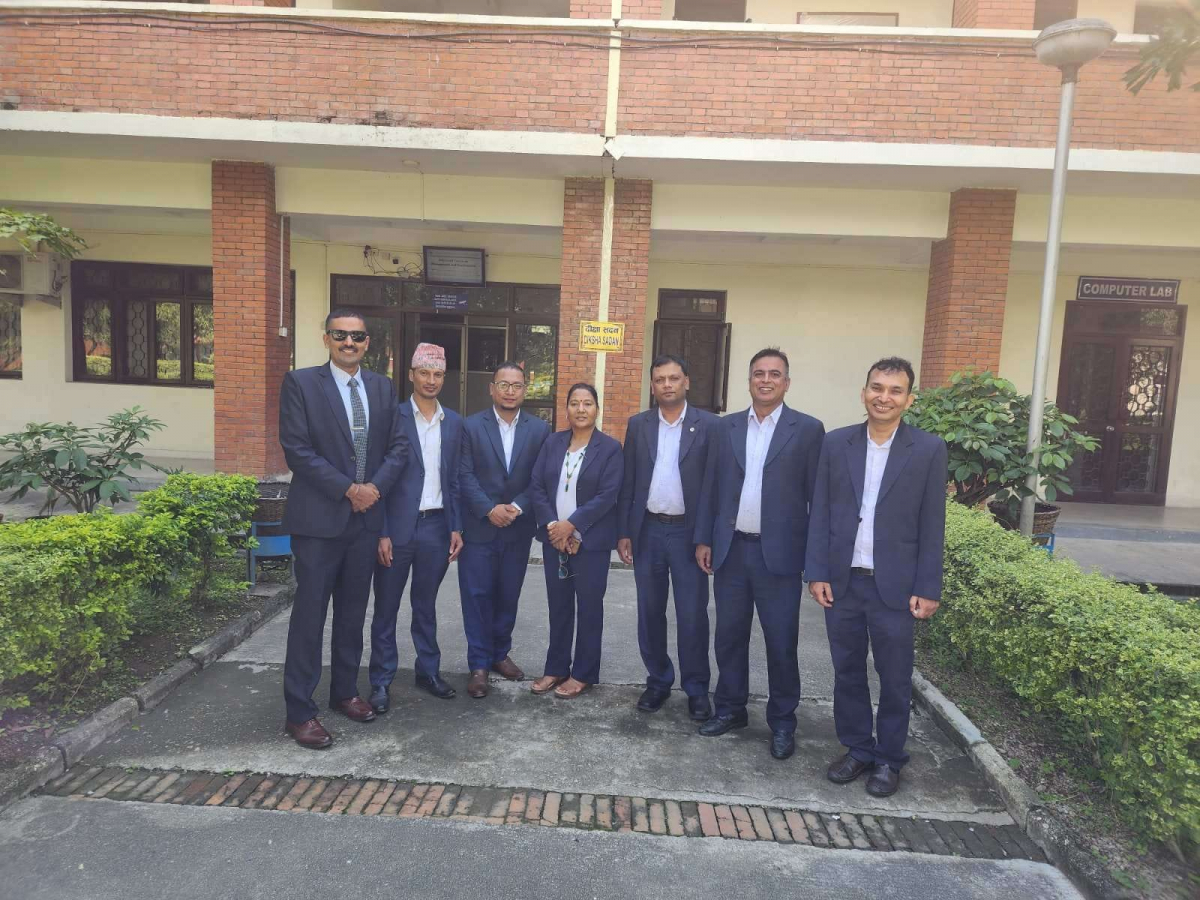
Nepal, being a landlock country is highly prone to multiple disasters due to diverse topography, rugged mountain and climatic conditions. The major disasters mainly constitute of flood, landslide, earthquakes, fire, epidemic and some others. Disaster are undesirable hazard events and cause damage to property and human life and also to the environment and ultimately affecting the economy of the country. The workshop under Advance Course of Management and Development, Know Your Economy Module presented by group one was concluded with the notion that preparedness for any disaster event should be considered a top priority with effective and reliable post disaster response.
The workshop titled Disaster Risk Reduction and Management was conducted in chairmanship of participant Mr. Gokarna Regmi. The presentation was honored by Deputy Executive Director, NASC Mr. Bishnu Prasad Lamsal as Chief Guest and Senior Director of Studies Mr. Basanta Raj Sigdel and Mr. Trilochan Pokharel. Also, the coordinator for the module Ms Shailaja Upadhaya and Mr. Shailendra Bhatta along with other faculties also honored us with their presence.
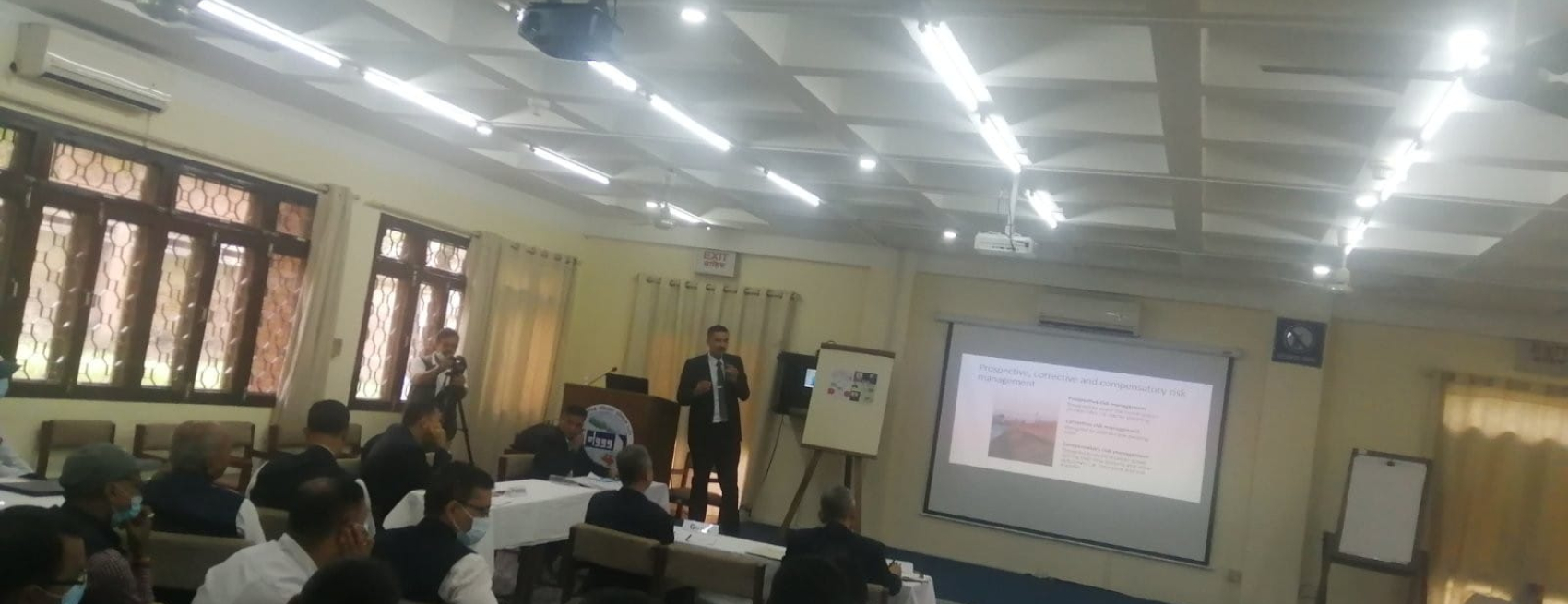
The presentation was done by participants Mr. Dipak Raj Baral and Mr. Saroj Adhikari and experience sharing of working in disaster management was shared by participant Ms. Lila Kumari KC. The presentation focused on the current status of disaster event in the country along with our standing in the world scenario. The national level policy documents were reviewed in context with disaster management and risk reduction and major stakeholders were identified in the presentation. The importance of capacity building of the stakeholders and ownership among the local government was highly emphasized. The cost benefit scenario of investment for disaster management was also discussed. The statement “for each dollar invested in risk reduction will save two to ten dollars in disaster response and recovery cost.” was stressed in the presentation.
After the presentation was completed, the floor was opened for question and answers. The faculty member from NASC indicated the need of paradigms shift from disaster management to disaster governance. The present practices focus on reactive approach for disaster response while focus also shall be made at reactive approach and develop more resilient institutional arrangement for disaster response. Further, every disaster event is related with the economy of the country. For example, the earthquake event in 2015 reduced the GDP by 1.5% and the recent ongoing COVID epidemic took the economy downhill. The disaster assessment should also focus on political economy of disaster. A new way to look at the disaster has also been introduced during the discussion. Disaster is not always a problem but also scope of innovation and shall be taken as a challenge for innovation intervention is disaster management. 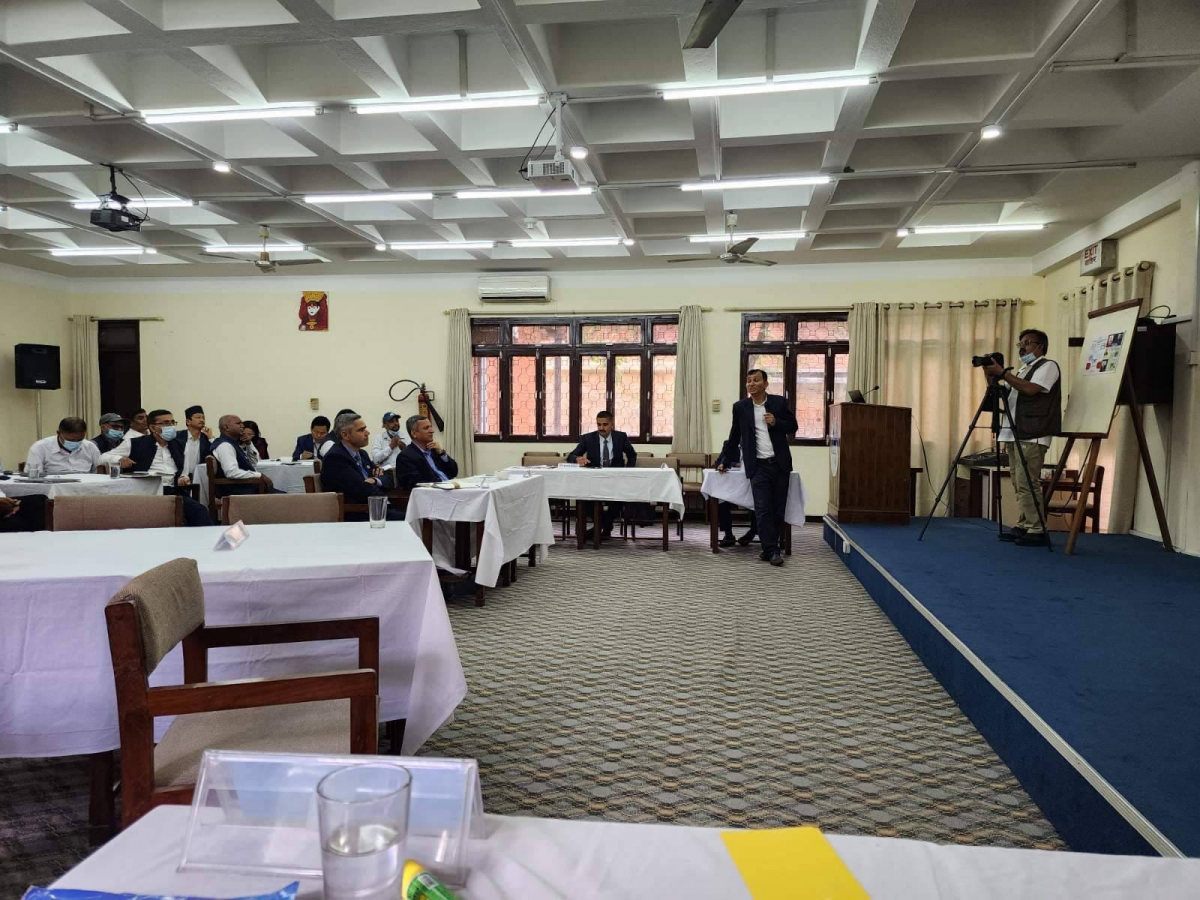
The other participant also wholesomely participated in the question answer session. Despite time limitation, questions from different participant were taken in. The queries mainly focused on improving inter-government coordination and also develop sense of ownership of local government regarding the disaster response management. The focus on prioritizing the vulnerable group during response was also highlighted by the participants. The use of technology was also advocated for early warning system and communication during disaster events.
After the question answer session, the presentation commentor Mr. Sahadev Thapa highlighted the need of quick and implementable mitigation plan for any disaster event. The change in land use pattern and implementation of strict regulation for construction of structure shall be put in place. Moreover, pre disaster rehearsals and effective response and recovery activity is advocated. Delay in response will create more disaster. The presentation concluded advocating the importance of hazard preparedness, and effective response and recovery during and after the disaster.
The workshop was managed by participant Ms. Lila Kumar KC and rapporteur by participant Mr. Saurabh Bajracharya and Mr. Sachchidanand Yadav.