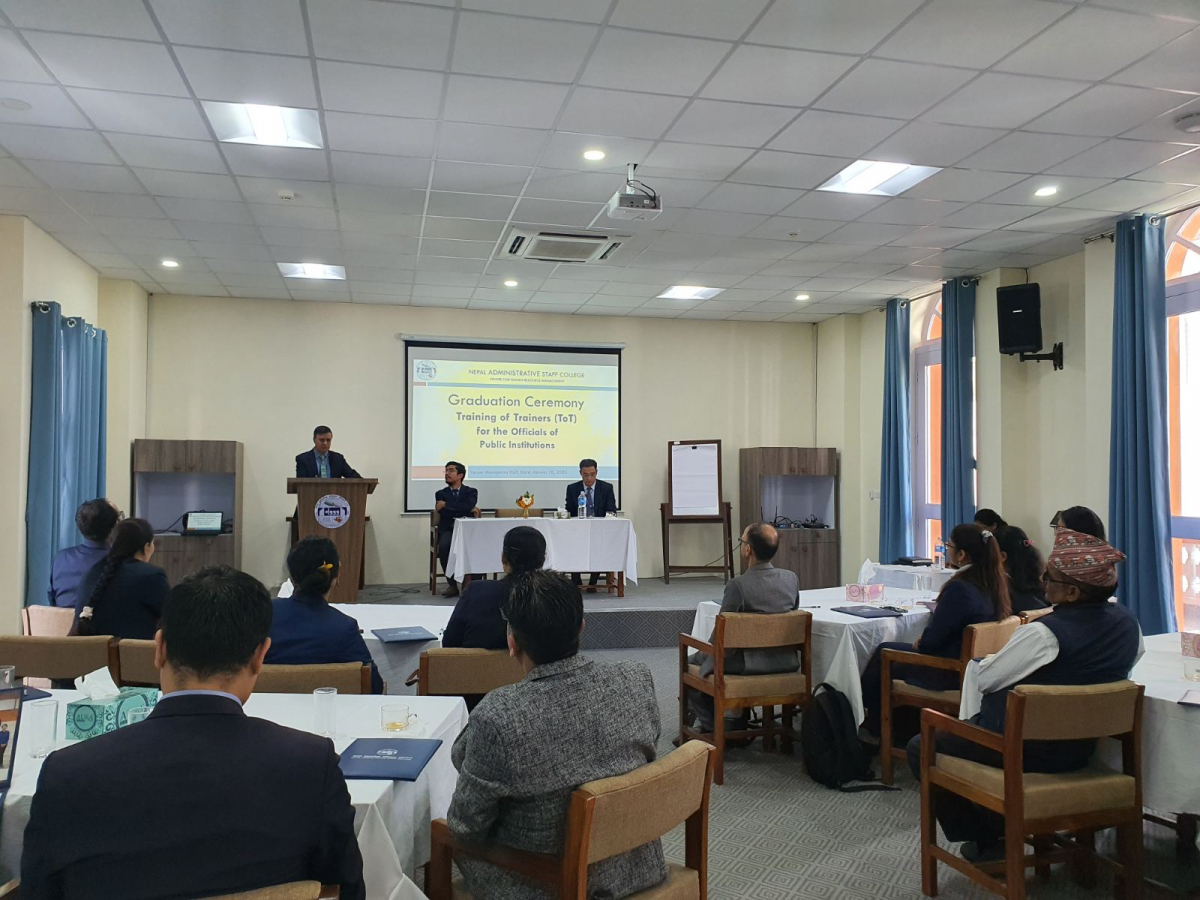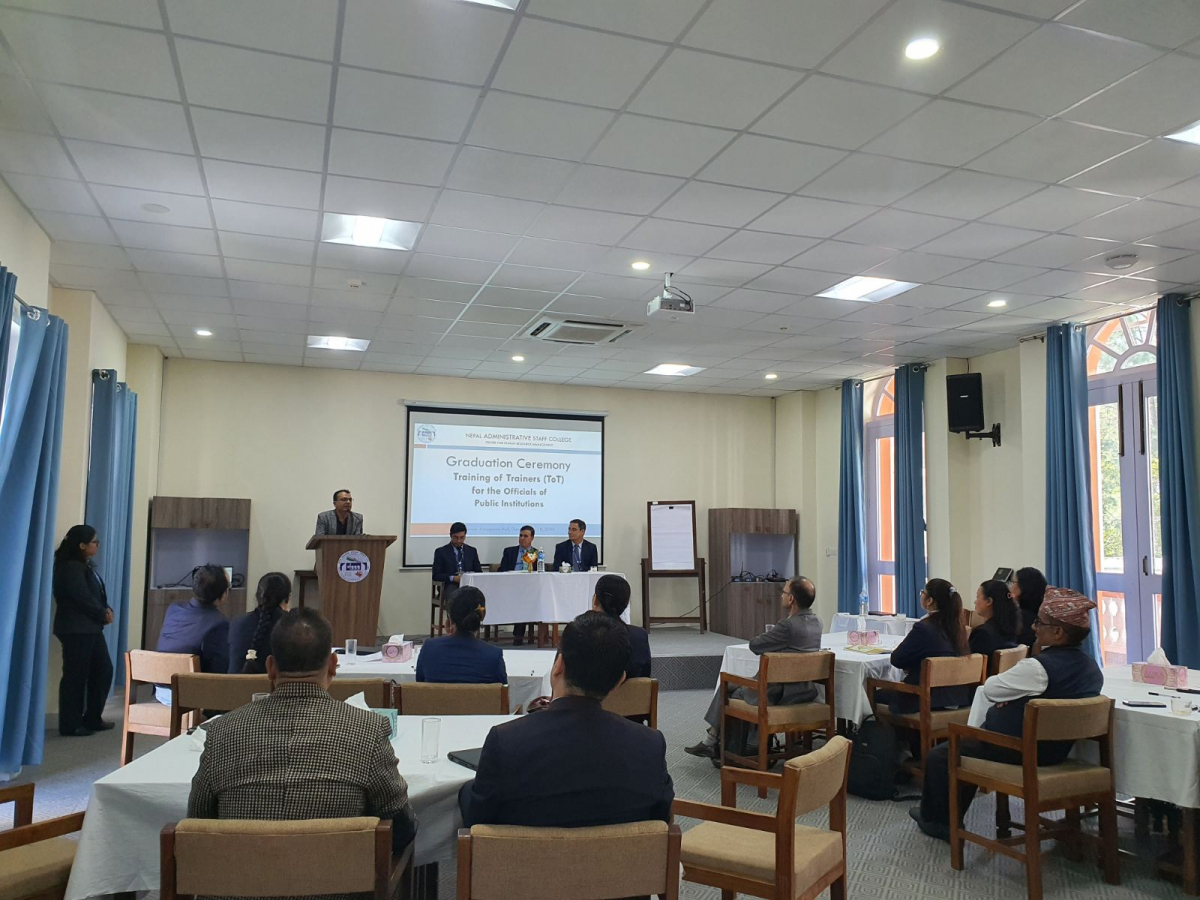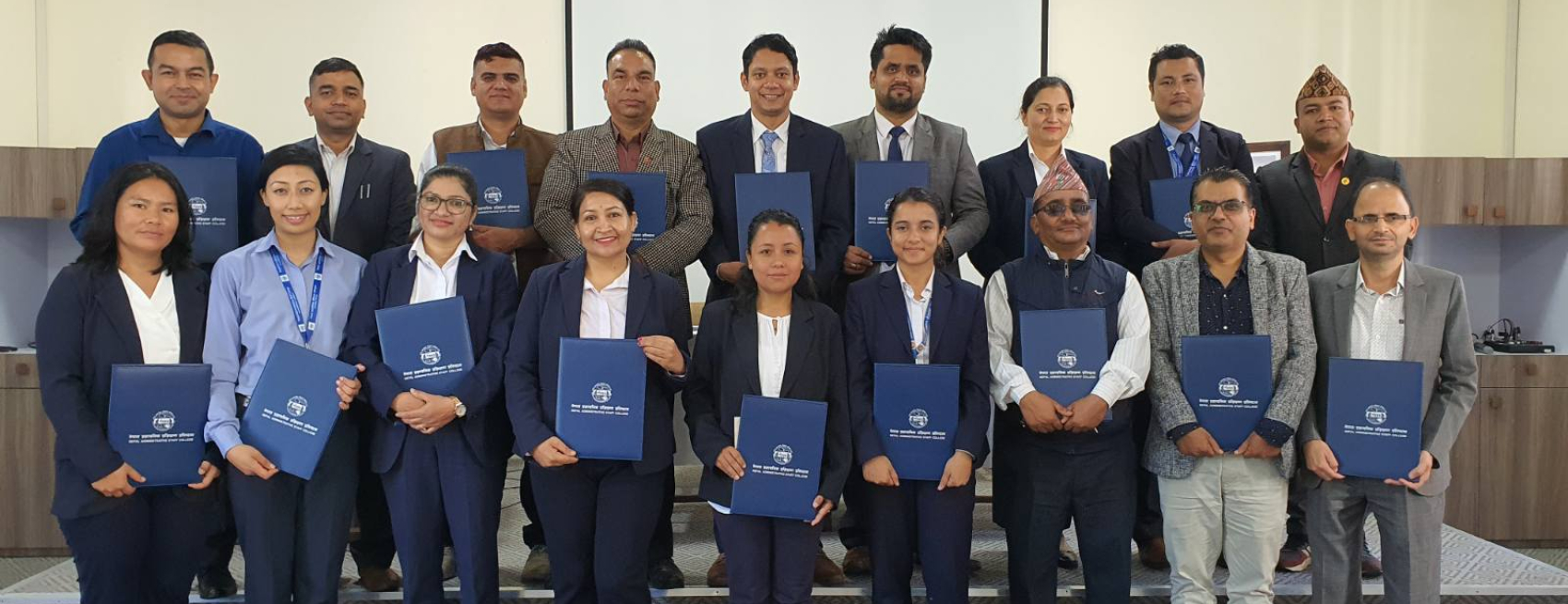
The Training of Trainers program for officials from various public organizations concluded on October 5, 2023, marking a significant milestone in enhancing the capacity and skills of participants. The program witnessed active participation from 21 dedicated officers representing 18 public organizations. The program was chaired by Dr. Rajan Khanal, Executive Director of NASC. Mr. Binod Kumar Bista, Senior Director of the NASC and Mr. Nabin Chapagain, Director of Studies, were also present at the graduation ceremony.
Ms. Sharmila Karki, the representative of the program participants, expressed her heartfelt gratitude for the invaluable training experience. She described the program as exceptionally insightful and acknowledged the knowledge gained during the training. Participants had the opportunity to delve into various aspects of training and refine their skills in training management and facilitation. Ms. Karki extended her sincere appreciation to NASC for their meticulous organization and management of the program.
Mr. Arjun Kumar Pokharel also shared his thoughts on the program, highlighting the significance of NASC as a prominent think tank within the public sector. He expressed pride in becoming an alumnus of NASC and commended the efficient management of the training program. Mr Pokharel proposed the inclusion of aspects of Eastern Philosophy in future sessions to make them more vibrant and relevant, ensuring that participants derive maximum benefits.
Mr. Chapagain congratulated all the participants, recognizing their dedication and commitment throughout the training. He emphasized that each session within the 15-day program was designed to transform participants into expert trainers. He believed the 21 newly trained trainers, representing various public institutions, would undoubtedly contribute significantly to their respective organizations.
In his closing remarks, Dr. Khanal highlighted the introspective journey that participants undertook during the program. He noted that the program allowed participants to analyze training theories and practical aspects, including session design and delivery, critically. Moreover, it facilitated meaningful interactions among participants and with the facilitators, fostering a conducive learning environment. Dr. Khanal reiterated that the program's primary focus was to enhance knowledge, refine skills, and produce a new cadre of trainers within the public sector. He expressed confidence that the public institutions represented by these trainers would greatly benefit from their expertise. The program's successful completion is a testament to the commitment to capacity-building and continuous learning within Nepal's public organizations. Dr Khanal believes it is a significant step forward in ensuring the growth and development of skilled trainers who will play a pivotal role in shaping the future of training and development initiatives. Ms. Antovna Gyawali hosted the event.