Manoj Sedai, DP Khadka, Shashi Shah
Jawalakhel, Lalitpur, March 29, 2024
A one-day ICT seminar on the theme “Improving Service Delivery through ICT: Government’s Prime Responsibility (Data, Information, and Security)” was successfully completed in the NASC premises on March 25, 2024 . The seminar was jointly organized by the trainee officers of the Rara, Janaki, and Mahakali groups of the 38th batch with the support of NASC.
The seminar was preceded by the field visit of all three groups, where Rara, Janaki, and Mahakali visited the Ministry of Health and Population (MoHP), the Department of Food Technology and Quality Control (DFTQC), and the Department of Immigration (DoI), respectively, on March 20, 2024, to understand and analyze the use of ICT in the business processes and public service delivery of subject offices.
The seminar, chaired by trainee officer Manoj Kumar Neupane, was held in the presence of Chief Guest Baldev Joshi, Director of Studies, NASC, and guests; Spokesperson - Joint Secretry of MoHP Dr. Prakash Budhathoki, senior food research officer Krishna Prasad Rai of DFTQC and Mr. computer engineer of DoI Pramod Sharma. NASC faculties and module coordinators were also present during the session.
Following the submission of the field visit report to the respective module coordinators by the groups, the seminar set up a perfect platform for trainee officers to reflect on their learnings and invoke a much-needed discourse among participants on the potential of ICT to radically enhance the quality and speed of public service delivery in Nepal.
The seminar was concluded in three rounds, in each of which a group first presented on human resource management, business process re-engineering, policy and the role of management, and technological aspects of the ICT systems of the subject institution, followed by a questions and answers session, observation of the panelists, speech from the representative of the concerned offices and finally concluding remarks from the chief guest.
Moderated by Sanjog Rai, presenters from Rara group Sarad Gautam, Prabina Acharya, Prayag Raj Padhya, Atal Prakash Puri, and Daman Dahal highlighted the different health systems used by the ministry to re-engineer the business processes, assessed the utility of such systems, and finally extended ways to effectively use and integrate such systems to yield desired benefits.
Panelist Yogesh Bhattarai commented on the presentation of the Rara group, appreciating their efforts and critically identifying the shortfalls. Later, a guest from MoHP, Dr. Prakash Budhathoki, while extending the concluding remarks, reiterated the efforts made by the ministry to integrate ICT systems in delivering health services across the country despite resource constraints. He also said that he would consider the suggestions extended by the group in future meetings of the Ministry.
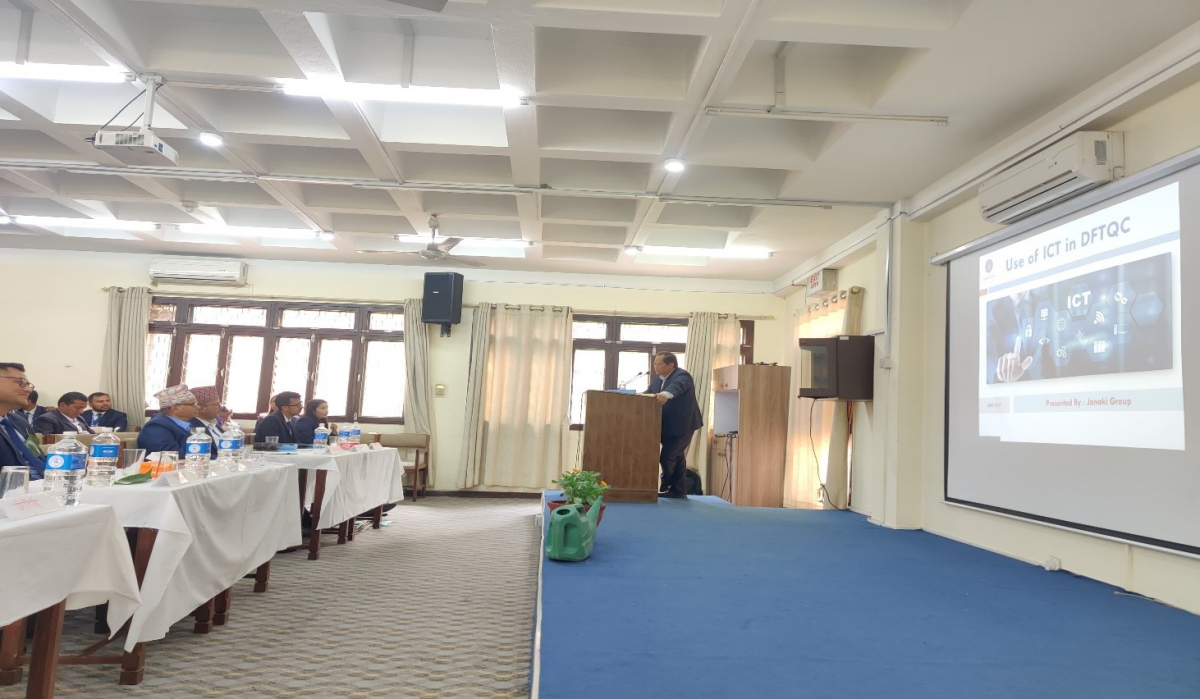
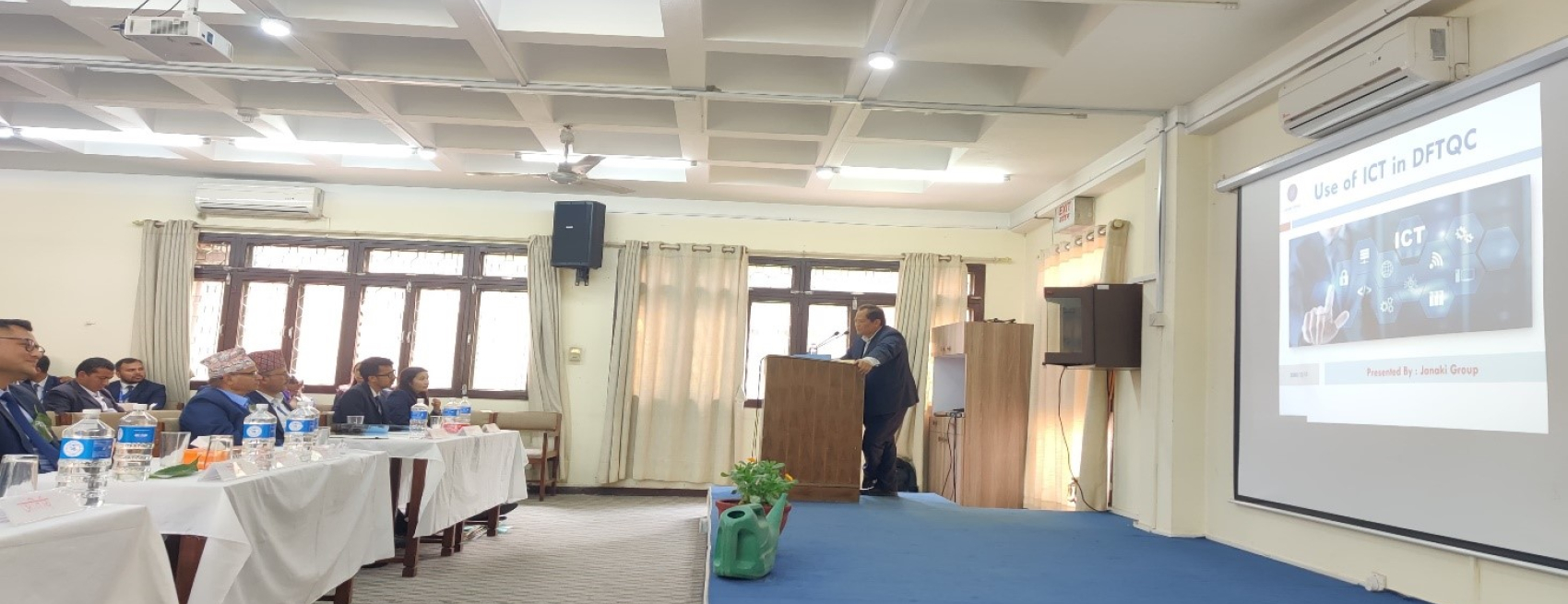
Subsequently, the second session of the seminar started with the presentation of Janaki Group, where the presenters ( Srijana Bhurtel, Sangam Paudel, Saroj Paneru and Mona jha and Bipul Bhusal ) shed light on the use of ICT systems, including the use of LIMS, at DFTQC to operate different business processes such as quality control, licensing, etc. Saroj Paneru, highlighting the value of data said "Data is the crude oil of the new world order,".
During the Q&A session, participants raised questions on the potential use of ICT to prevent and detect food adulteration, to carry out market inspections, and to issue online licensing. Trainee officers also expressed concerns about the data security of the systems.
Later, senior food research officer of DFTQC and guest Krishna Kumar Rai not only addressed the intellectual curiosity and concerns of the participants but also emphasized the different digital initiatives taken by the department, underscoring the indispensable role of ITC systems in the efficient functioning of the DFTQC. 'Food safety is a comprehensive concept and a pressing issue today and needs joint efforts from all the stakeholders,' added Mr. Rai, closing his speech.
The second session was moderated by Mr. Tej Bahadur Bogati, on which panelist from the Rara group, Mr. Arbin Ranabhat, shared his perspectives on the topic presented.
After the lunch break, the final session of the seminar began with moderator Mr. Krishna Thapa throwing lights on the background of the DoI. The session unfolded with Mr. Bikram Panthi underscoring the importance of maintaining quality in the service of Department of Immigration, emphasizing that DoI is the first point of contact with GoN for tourists arriving in Nepal.
Mr. Prateek Raj Joshi concluded the presentation by saying, "It is time that Nepal move towards digitalization from digitization," while sharing the group's learning and extending the way forward for the Department of Immigration. Other presenters from the group were Shiva Shankar Pandey, Isha Budhathoki and Kushal Pandey.
Afterwards, representative and guest from DoI, Pramod Sharma, recapitulated in his speech how in-house software 'Nepaliport' has revolutionized the functioning of DoI. He further clarified on the occasional service disruptions seen in DoI TIA, adding that DoI is capable of resolving such issues within less than ten minutes and ensuring that the system is safe to use with no space for data redundancy.
Panelist Mr. Prem Badwal forwarded his critical observation while appreciating the effort of the Mahakali group manifested in the quality of the slides and cohesiveness of the presentation.
At the end of the event, chief guest Mr. Bal Dev Joshi emphasized that it is imperative to undertake studies to assess the return on investment of ICT systems, elucidating the fact that only 3% of ICT projects turn into success. He further, defying the misconception that ICT kills jobs, added that Nepal must focus on development, promotion and protection of it's IT systems. He ended his speech by reiterating that there is no alternative to officer trainees familiarizing themselves with the latest ICT trend.
The seminar was hosted by trainee officers Bishal Ghimire and Sarita Thapa. Dharmendra Joshi played a pivotal role in ensuring the timely completion of the program.